
iWALK Knee Crutch vs. Crutches: Which Rental Fits Your Recovery?
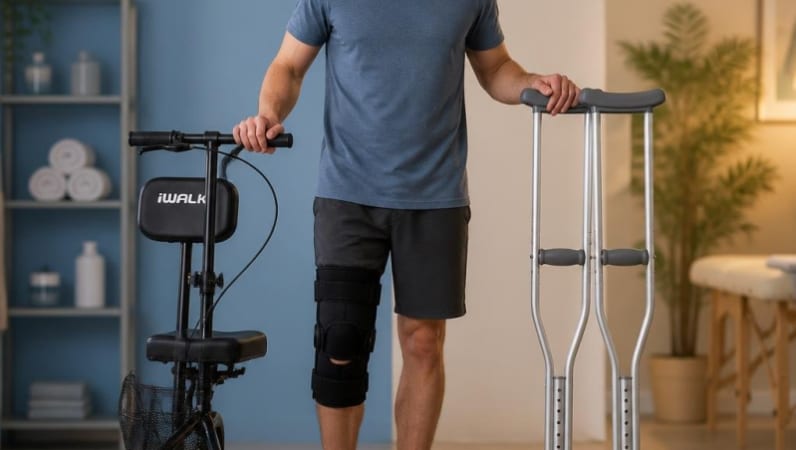
Recovering from a foot, ankle, Achilles, or lower-leg injury can change everything about your day, especially when simple tasks like carrying a coffee, opening a door, or moving around the house suddenly require a plan. In Arnprior, where winter sidewalks, home steps, and quick trips downtown can add an extra layer of challenge, choosing the right mobility aid matters more than many people expect.
If you are comparing standard crutches with an iWALK Hands Free Knee Crutch Mobility Aid, the right answer usually comes down to your injury type, your balance, and how you want to move through daily life. Renting an iWALK Hands Free Knee Crutch Mobility Aid in Arnprior can be a smart short-term solution for adults who need below-the-knee, non-weight-bearing support without the strain of underarm crutches. This guide breaks down when the iWALK makes sense, when regular crutches may still be the safer choice, and what local conditions in Arnprior can affect comfort and confidence during recovery.
What Makes the iWALK Different from Standard Crutches?
The biggest difference between the iWALK knee crutch and standard crutches is posture. Traditional crutches force you to support your body with your arms, shoulders, and hands, which can become tiring very quickly. The iWALK shifts support to a hands-free, below-the-knee platform that lets many users stand more upright. That upright position can feel more natural during routine tasks, especially if you need to move around the kitchen or carry small items from room to room. For many adults, that alone changes the feel of recovery from frustrating to manageable. It also helps reduce the awkwardness that can come with navigating tight hallways or doorways in an older home. Because your hands remain free, you can often do more without stopping every few minutes to reset your grip. That is one reason the iWALK stands out in the Medical-Accessories category as a practical short-term aid.
Standard crutches still have an important place, though, especially for people who need a simpler setup or who are not good candidates for a hands-free device. They are often more familiar to users and may be easier to understand at a glance. But they can place significant pressure under the arms if fitted poorly, and that pressure can lead to soreness or fatigue. The iWALK avoids underarm strain, which is helpful during longer recovery periods. It can also spare the wrists from repetitive loading that sometimes happens with conventional crutches. In everyday terms, that means less of the “I just need to sit down for a minute” feeling after moving across the house. For some people, that comfort difference is the reason they stay more active while healing. The right choice depends on your stability, your doctor’s instructions, and what kind of movement you need most.
Another practical difference is storage and transport. Standard crutches are lightweight, but they can still be awkward to set down, lean against a wall, or carry into a car. A knee crutch like the iWALK is compact in a different way, and many renters appreciate how much easier it can be to store near an entryway or beside a chair. That matters in a smaller space, whether you live in a townhome, a bungalow, or a home with narrow stairs. Since this rental is listed in Used_Like_New condition, renters can expect a clean, ready-to-use device that has already been checked for practical usability. The fact that it is a used-like-new mobility aid also makes short-term recovery feel less wasteful, because you are using equipment only for the time you need it. For many Arnprior residents, that kind of temporary flexibility is exactly what makes a rental useful. It keeps recovery focused on healing instead of on equipment ownership.
There is also the question of independence. People often choose crutches thinking they are the default option, but the iWALK can make some routine tasks feel more normal. You may be able to use railings more naturally, answer the door without putting the device down, or manage light household movement with less interruption. That can be especially helpful when family members are away and you are trying to keep a regular schedule. If you are balancing work calls, medical appointments, or a few errands around Arnprior, that extra freedom can matter. The device is not a cure-all, but it can reduce the number of times you need to ask for help with tiny tasks. Those tiny tasks add up fast during recovery. Choosing the right aid is often less about one perfect feature and more about which frustrations you want to reduce first.
Of course, the iWALK is only appropriate for specific injuries. It is designed for below-the-knee, non-weight-bearing situations and should not be used for knee, thigh, hip, or balance-related injuries. That limitation is important because a hands-free tool can feel empowering, but only if it matches the injury properly. Before choosing it, users should review their healthcare provider’s guidance carefully and think honestly about whether they can follow non-weight-bearing instructions. The best results usually come from people who are confident on their feet and willing to spend a few minutes adjusting the fit indoors before heading out. In other words, this is a specialized tool, not a one-size-fits-all solution. When used correctly, though, it can make daily movement feel less like a chore. That is why many renters compare it so closely with standard crutches before making a decision.
If you are renting in Arnprior, it is worth thinking about where you will use the device most. A short trip to a medical appointment on a clear day is one thing, but moving across a wet driveway or through a busy entrance is another. The iWALK tends to shine when the surfaces are dry, stable, and predictable. Standard crutches may still be the backup option for unpredictable terrain or very short hops where you want maximum simplicity. This is why many people ask not just “Which is better?” but “Which is better for my real day-to-day life?” That question usually leads to a better answer. The right aid should support your routine instead of forcing you to build your routine around it. In that sense, the comparison is really about lifestyle, not just equipment.
When an iWALK Knee Crutch Rental Makes the Most Sense in Arnprior
Renting an iWALK Hands Free Knee Crutch Mobility Aid in Arnprior makes the most sense when your injury is below the knee and you need a temporary solution that keeps both hands available. That is especially helpful if you are still handling daily life at home, getting to appointments, or managing short errands around town. Instead of relying on your arms to do all the work, you can distribute mobility in a way that feels more natural to many users. This can be a real advantage when the day includes multiple short trips rather than one long outing. If you are the kind of person who still wants to prepare meals, answer the door, or carry a mug from room to room, hands-free support can feel like a big upgrade. It does not eliminate the need for caution, but it changes how much you have to stop and reset. For many people, that is the difference between coping and feeling stuck.
Local context matters here too. Arnprior weather can shift quickly, and winter conditions can make even familiar routes feel less predictable. Snow, ice, slush, and sloped driveways are all reasons to think carefully before heading out. The iWALK works best on dry, stable surfaces, so many renters use it most confidently indoors, on cleared walkways, or for carefully planned short trips. That said, even in milder seasons, you still need to watch for uneven pavement, wet leaves, gravel, or curb edges. A mobility aid does not remove environmental risk, but it can help you move in a more upright and controlled way if conditions are right. This is one reason local renters often appreciate advice tailored to the seasons. In Arnprior, recovery is not just about healing bone or tissue; it is also about adapting to the weather outside your front door.
A customer scenario that comes up often is the adult who has a temporary foot or ankle injury but still wants to remain independent at home. Picture someone recovering after surgery who needs to get from the bedroom to the kitchen, then out to a follow-up appointment, and later to a short family visit. Standard crutches can work, but the repeated hand and shoulder effort may start to wear them down by midday. With a hands-free knee crutch, some of those transitions become easier because the user can steady themselves with railings or carry a phone more naturally. One renter described it as feeling like they could finally move “without arranging their whole day around the crutches.” That kind of feedback reflects a simple truth: comfort affects behavior. When movement is less frustrating, people tend to follow recovery instructions more consistently. A better fit does not just feel better; it can support better habits.
The iWALK also suits people who need to keep their living space functioning around them. If you have to open cupboards, move laundry, or shift a lightweight object from one surface to another, being able to use both hands is a real advantage. The device is not intended for heavy lifting, and users should still avoid risky tasks, but it makes many ordinary actions more manageable. In a compact home, that can reduce the amount of assistance you need from others. It may also make mornings easier, when you are trying to get dressed, prepare breakfast, and get moving without a long delay. A standard crutch user often needs a place to set the crutches down before doing each small task. The iWALK reduces that repetitive start-stop cycle. Over a week of recovery, that difference can feel surprisingly significant.
Another reason some people prefer the iWALK is the upright posture. For users who dislike the feeling of leaning into underarm supports, the hands-free knee crutch can feel less awkward. That can help with confidence in familiar indoor spaces, especially hallways, kitchens, and bathrooms where tight turns are common. It can also be easier to manage simple social situations, such as greeting a visitor at the door or moving from a car into a clinic lobby. If you are trying to keep your recovery discreet and calm, the device can help you look and feel more steady. Of course, it still requires practice. The first day should not be your first attempt at a busy outing. Spend time indoors adjusting the fit and walking a few cautious steps before using it outside. Small preparation steps often make the difference between a smooth experience and a stressful one.
Because this rental is in the Medical-Accessories category, it is meant to support temporary recovery, not to replace professional advice. It is still important to follow the non-weight-bearing instructions given by your provider. If your injury affects your balance, hip, thigh, or knee, this is not the right device. But when your situation matches the design, the iWALK can be a very practical rental option. The Used_Like_New condition is also reassuring for renters who want equipment that feels maintained and ready. There is comfort in knowing the item is meant to be used right away, without a complicated setup. That matters when you are already dealing with pain, swelling, or limited mobility. The simpler the support tool feels, the more energy you can keep for healing.
In short, the iWALK works best when freedom, upright movement, and temporary convenience are your top priorities. It is especially valuable if you need to stay functional in your home and around Arnprior without overloading your arms. For the right injury and the right user, it can feel much more natural than traditional crutches. For the wrong injury, though, it is not the answer. That honesty is important because the best rental is the one that genuinely fits your recovery. When the fit is correct, the benefits are easy to notice quickly. When it is not, even a well-designed device can become more trouble than help. A careful decision up front saves frustration later.
How to Decide Between an iWALK and Regular Crutches
The easiest way to decide is to start with your injury and then work outward to your daily life. If you have a below-the-knee, non-weight-bearing injury and you are confident with balance, the iWALK may be a strong fit. If your injury involves the knee, thigh, hip, or balance system, standard crutches or another device may be safer. That distinction is the most important one, and it should come before any discussion of convenience. From there, think about how much standing, walking, and moving around your home you actually need to do. Some people only need help from bed to bathroom and back again, while others need to manage household routines and occasional errands. The more your recovery overlaps with everyday tasks, the more the hands-free design may appeal to you. But the final choice should always align with medical guidance first.
Next, consider your comfort with coordination. Standard crutches require upper-body effort and a certain rhythm, but the movement pattern is widely known. The iWALK introduces a different type of balance, and that learning curve matters. If you prefer an aid you can understand very quickly, crutches may feel more familiar on day one. If you are willing to spend time indoors practicing and adjusting the straps, the iWALK can offer a bigger return in convenience. This is why the “best” option is often the one that matches your personality as much as your injury. Some people like simple and familiar. Others prefer the freedom of being hands-free. Neither answer is automatically right for everyone. A thoughtful rental is one that respects your real comfort level.
Here is a simple decision guide that many renters find useful before making a choice:
- If you need your hands free for doors, light household tasks, or carrying small items, the iWALK may be worth considering.
- If your main concern is getting from point A to point B with the least learning curve, standard crutches may be the better starting point.
- If you expect to spend most of your recovery indoors on dry, stable floors, the iWALK can be especially practical.
- If you will be frequently dealing with stairs, snow, ice, or uneven ground, caution should be high and your provider’s advice should lead the decision.
- If your balance is shaky or unpredictable, a hands-free knee crutch may not be appropriate.
- If your arms, shoulders, or wrists are already sore, a solution that reduces upper-body strain may be helpful.
Another factor is storage and living space. In many homes, especially when recovery already makes movement slower, equipment that is easier to store can feel less intrusive. Standard crutches can be leaned against a wall, but they still tend to travel with you in a visible way. The iWALK has a lower profile, and some renters appreciate not having a pair of long supports always in the way. This can matter if you are hosting family, navigating pets, or simply trying to keep a tidy path through a small room. It is a subtle point, but practical recovery tends to be full of subtle points. The easier it is to live around the aid, the easier it is to keep using it consistently. That consistency often matters more than people realize.
It also helps to think about confidence outside the house. If you are planning to go out for a medical appointment, a short visit, or a quick stop downtown, ask yourself which aid lets you feel more secure. Some people trust crutches more in changing conditions because they can test each step. Others feel steadier with the iWALK because they can stand more upright and keep a hand available for a railing or support point. Both perspectives are valid. The right answer often becomes obvious once you imagine the specific route you will take. For example, a cleared sidewalk near downtown Arnprior on a calm day may feel manageable with either option, while a snowy curb or wet entryway might change the equation. Matching the device to the outing is a wise habit. Recovery is not just about the body; it is also about decision-making.
Finally, pay attention to the practical details of fit. The iWALK depends on proper adjustment at the thigh, calf, and foot platform. A snug, secure fit improves comfort and control, which is why spending a few minutes indoors first is so important. Standard crutches also require proper height and hand placement, so neither option should be used casually without basic setup. If you are comparing both, the question is not only which is easier to carry, but which one you can fit correctly and use safely. That is especially true for the first few days of recovery, when swelling, discomfort, and fatigue can change how everything feels. The more carefully you set up the device, the fewer surprises you are likely to have later. Good fit is one of the most underrated parts of mobility support.
Using the iWALK Safely in Arnprior Weather and Terrain
Arnprior’s weather can make a big difference in how any mobility aid performs, and that is especially true for a device designed for dry, stable surfaces. In the warmer months, the main concerns are uneven sidewalks, loose gravel, and the occasional slick patch after rain. In fall, wet leaves can become surprisingly slippery, even on familiar routes. In winter, snow and ice are the obvious hazards, but slush and hidden curbs can be just as tricky. The iWALK can be useful in these seasons, but only when the environment is controlled enough for safe use. This is why many renters use it most indoors or for carefully planned outings. The device is designed to help, not to encourage risky movement. A cautious mindset is part of using it well.
Before leaving home, it helps to do a quick visual check of the path you plan to take. Look for wet spots, ramps, rough patches, and any sudden changes in surface height. If you are heading to a clinic, store, or community visit, think about whether there is a sheltered entrance or a smoother walkway you can use. In Arnprior, a little planning can prevent a lot of frustration. If possible, choose times of day when sidewalks have been cleared and traffic is lighter. This is especially useful after a snowfall or freeze-thaw cycle, when conditions may shift from one hour to the next. The more predictable your route, the more confidence you are likely to have. That confidence matters because hesitation can be as tiring as the steps themselves.
It is also wise to build a home routine that matches the device. If you know you will need to go from one room to another often, clear clutter from the floor and keep commonly used items within easy reach. A hands-free knee crutch gives you more mobility, but a messy hallway can still cause trouble. Small adjustments, like moving a laundry basket out of the path or keeping a water bottle on a side table, can make a big difference. The goal is to reduce the number of times you need to improvise. When recovery is already demanding, a well-organized space can make the day feel more manageable. This advice may sound simple, but it often saves users from unnecessary strain. Good mobility support works best when the environment supports it too.
Stairs deserve special mention. The iWALK can help many people move more naturally on level ground, but stairs still require extra caution and should only be approached if you have been instructed and feel stable doing so. If your home has steps at the entrance, plan ahead for how you will manage them. A railing, a cleared path, and a steady pace are essential. Never rush just because the device feels convenient. Convenience should never be confused with invincibility. The best users treat the iWALK as a tool for controlled movement, not a license to test limits. If a route looks uncertain, it is better to pause and ask for help than to push through it. Recovery usually rewards patience more than speed.
One practical benefit of the iWALK in home settings is that it can make simple daily routines feel less interrupted. Brushing teeth, making toast, or standing at the sink may be easier when you are not trying to balance a pair of crutches. Still, those tasks should be approached carefully, especially if you are tired or in pain. The more complex the task, the more important it is to move slowly and avoid multitasking. If you are carrying something, keep it light and manageable. The ability to keep your hands free does not mean every task becomes safe. What it really means is that you have more control over the small things that fill a normal day. That kind of control can be reassuring during recovery.
For outdoor use, think in terms of short and purposeful trips rather than long walks. A quick appointment or an errand near downtown Arnprior may be reasonable when conditions are dry and your route is predictable. If weather changes or the ground feels unstable, switch to a different plan. This flexibility is one of the benefits of renting rather than buying, because you can focus on the period of need without feeling committed to one approach forever. The best recovery routines adapt to the day. In a town where weather can change quickly, that flexibility is useful. It keeps the attention on healing and safety rather than on forcing one device to do everything. Sensible caution is part of local living here, and it pairs well with practical medical equipment.
Ultimately, safe use comes down to three habits: check the fit, check the route, and check your energy level. If any one of those is off, the outing may be better postponed. The iWALK is a strong mobility aid, but only when used with judgment. That is why local context matters so much in Arnprior. Terrain, weather, and routine all shape the experience. If you respect those variables, the device can be a valuable help during a difficult period. If you ignore them, even good equipment can become frustrating. Recovery always rewards the patient and the prepared.
Why Renting Can Be the Smarter Short-Term Choice
Many injuries that require non-weight-bearing support do not last forever, which is one reason renting often makes more sense than purchasing. If you only need an aid for a few weeks or a couple of months, it can be helpful to choose a solution that matches the length of recovery rather than making a long-term commitment. That is especially true for a specialized item like the iWALK. Because it is designed for a specific type of injury, its usefulness may be limited to a particular recovery stage. A rental keeps the focus on getting through that stage with the right support. It also means you can choose based on current needs instead of guessing what you might need later. For many people, that simplicity is a relief during an already stressful time.
There is also a psychological benefit to renting medical equipment. When you borrow a tool for a defined period, the arrangement feels temporary and purpose-driven. That can make recovery feel more manageable because the equipment is clearly tied to healing rather than to a permanent lifestyle change. The Used_Like_New condition of this item supports that sense of readiness. It arrives with the practical expectation that it should be ready for immediate use after fit adjustments and basic guidance. That matters because the first days after an injury or procedure are often the hardest. You want fewer logistics, not more. A clean, ready-to-use medical accessory lowers the barrier to getting started. And the sooner you can move safely, the easier it may be to keep up with your normal routine.
Renting also helps people match the device to a real-world situation instead of a theoretical one. Maybe you need more support for a short period around a follow-up appointment. Maybe you are returning to work and need a hands-free option for part of the day. Maybe you live near downtown Arnprior and want to remain active without constantly depending on someone else to carry things. A rental gives you room to adapt as your recovery changes. If a standard crutch feels too limiting, the iWALK may be worth trying. If the iWALK is not the right fit, you have not made a long-term equipment decision based on a temporary injury. That flexibility is one of the strongest reasons to rent.
Another advantage is the chance to focus on function rather than ownership. People sometimes get caught up in buying the “best” product instead of the most appropriate one. With a rental, the question becomes simpler: does this help me safely get through the next stage of recovery? That shift in mindset is useful. It encourages practical choices, not speculative ones. It also fits the reality of medical recovery, which often changes from week to week. One week you may need maximal support; the next week you may need just enough help to manage errands. A rental lets your mobility plan evolve with your healing. That adaptability is especially helpful if you are trying to balance rest, appointments, and normal responsibilities at home.
For local residents, renting in Arnprior can also reduce the stress of timing. You do not need to wait until a long-term purchase decision is made before addressing mobility needs. If you know you have a set recovery window, such as after surgery or a confirmed non-weight-bearing period, a rental can provide support right when you need it most. This is one of the biggest practical advantages of the Medical-Accessories category. The equipment serves a clear purpose, then steps aside when the purpose is complete. That is a healthy way to think about recovery tools. They should support your healing, not complicate your life. When the item fits the situation, a temporary rental can feel almost like a custom solution.
The final benefit is peace of mind. You know the device is intended for short-term use, it is in Used_Like_New condition, and it comes with the kind of practical guidance that helps you get started carefully. You also know that if your needs change, your mobility plan can change too. That is a smart approach for many adults dealing with below-the-knee injuries. It is not about having the most gear; it is about having the right gear for the moment. If that moment calls for a hands-free, upright, more flexible mobility aid, the iWALK can be a very strong option. If not, standard crutches may still be the better path. A thoughtful rental makes that decision easier, not harder.
When you compare an iWALK knee crutch with standard crutches, the best choice depends on your injury, your balance, and the kind of recovery you are trying to manage day to day. For below-the-knee, non-weight-bearing injuries, the iWALK can offer upright, hands-free movement that feels more natural than traditional crutches, especially for indoor routines and short, planned outings in Arnprior.
If your recovery includes winter sidewalks, home stairs, or frequent short errands, the right mobility aid can make a real difference in comfort and confidence. Renting an iWALK Hands Free Knee Crutch Mobility Aid in Arnprior is often a practical way to support healing without committing to equipment you may only need temporarily. The key is to choose safely, fit it properly, and respect local conditions so your recovery stays as smooth as possible.
About The Author
