
Knee Injury? Why a Standard Wheelchair Probably Won't Work — and What You Need Instead
Ottawa Medical Rental Solutions | Mobility & Recovery Guides
Knee Injury? Why a Standard Wheelchair Probably Won't Work — and What You Need Instead
A practical guide from Ottawa Medical Rental Solutions to help you choose the right wheelchair and speed up your recovery.
The Most Common Mistake Knee Injury Patients Make
Every week, we hear a version of the same story. Someone has had knee surgery — a torn ACL, a meniscus repair, a patella fracture, or a serious ligament injury — and they need a wheelchair to get around during recovery. So they search online, find a standard wheelchair, and either rent or borrow one without thinking twice. A few days later, they're calling us in discomfort, unsure why they can't get comfortable or why their leg keeps swelling.
The answer is almost always the same: they got the wrong chair.
A standard wheelchair is designed to support someone in a comfortable seated position — knees bent at roughly 90 degrees, feet resting on footplates close to the ground. For most medical conditions, that works perfectly fine. But for a knee injury, bending the knee 90 degrees can be painful, counterproductive, and in some cases, directly opposed to what your surgeon or physiotherapist has prescribed.
If you're recovering from a knee injury, what you almost certainly need is a wheelchair with elevated leg rests — sometimes called elevating or extendable leg rests. This guide explains why, walks you through the different options available, gives you realistic timelines for how long you'll likely need the chair, and shares tips to make your recovery as smooth as possible.
Why Your Knee Needs to Stay Straight (or Close to It)
When you injure your knee — whether from surgery, a fracture, or soft-tissue damage — several things happen at once. Swelling develops around the joint as the body's natural inflammatory response kicks in. Pain and muscle guarding restrict movement. And depending on the injury, your surgeon may place specific restrictions on how much you can flex or bend the knee during the healing phase.
For many common knee injuries, especially post-surgical cases, keeping the leg elevated and relatively straight serves three critical purposes:
- Reduces swelling: Elevating the leg above heart level encourages fluid to drain away from the injury site, reducing inflammation and discomfort significantly.
- Protects the repair: Many surgical repairs — ACL reconstructions, meniscus repairs, patella surgeries — involve grafts, stitches, or anchors that are vulnerable in the early healing phase. Bending the knee excessively can stress these repairs before they've properly healed.
- Improves circulation: Keeping the leg straight and elevated promotes healthy blood flow through the veins, reducing the risk of complications like blood clots (DVT), which are a real concern after lower-limb surgery.
In a standard wheelchair, the footrests are positioned close to the ground, naturally encouraging a bent-knee posture. Even if you try to extend your leg, there's nothing to support it — it will drop down under its own weight. This forces your knee into a flexed position for hours at a time, which is the opposite of what you need.
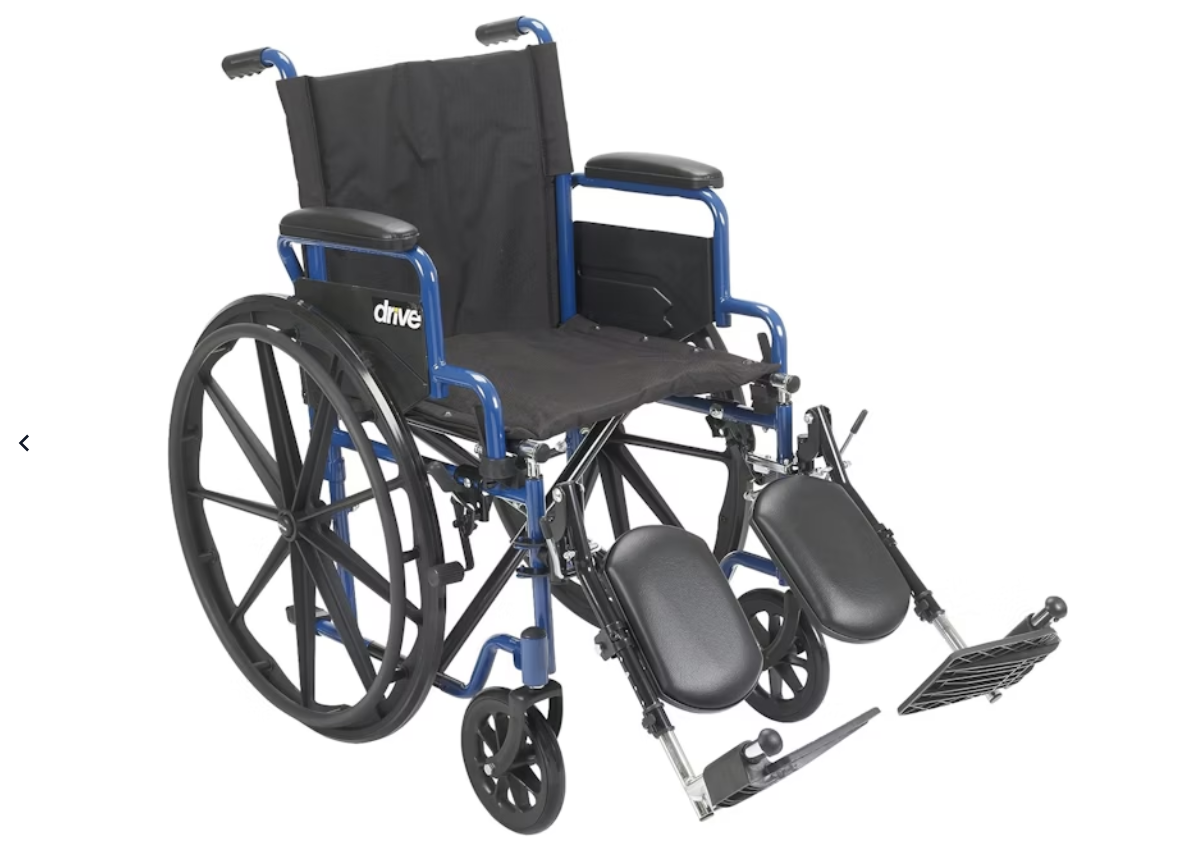
An elevated leg rest solves this by extending outward and upward in front of you, supporting the full length of the leg from the thigh down to the heel. The leg rests flat, weight is distributed evenly along the calf via a padded calf support, and your knee remains in the position your doctor intended.
Standard Wheelchair vs. Elevated Leg Rest Wheelchair: What's the Difference?
Standard Wheelchair
A standard manual wheelchair has fixed or swing-away footrests set at a 90-degree angle. Your feet rest on footplates, your knees are bent, and your legs hang down toward the floor. This is fine for people with spinal injuries, general mobility limitations, or recovery from upper-body procedures where the legs are unaffected.
Wheelchair with Elevated (Elevating) Leg Rests
An elevated leg rest wheelchair features one or two leg supports that can be raised outward to varying angles — often from roughly 90 degrees (roughly parallel to the floor) all the way up to almost fully extended. Each leg rest includes a padded calf support that bears the weight of the lower leg, and a footplate at the end to support the foot.
Key features to look for include:
- Angle-adjustable elevation: The leg rest should be adjustable in small increments, allowing you to gradually lower it over time as your range of motion improves.
- Independent left/right adjustment: If only one leg is injured, you'll want the other leg rest in a normal (lowered) position for comfort and balance. Good quality chairs allow each side to be set independently.
- Padded calf support: This distributes weight evenly along the lower leg and prevents pressure points.
- Swing-away or removable feature: Leg rests that pivot to the side make it much easier to transfer in and out of the chair safely, which matters a lot when you're already dealing with a painful knee.
- Lightweight and foldable frame: Most rental wheelchairs with elevated leg rests are built on a lightweight aluminum frame that folds for easy transport in a car.
Quick Tip from Our Team
When you call us to rent a wheelchair, just tell us which leg is injured and whether you've had surgery. We'll make sure you get the right chair with the correct leg rest configuration from day one — saving you the hassle of switching later.
Types of Knee Injuries and How Long You May Need a Wheelchair
Recovery timelines vary significantly depending on the type and severity of your injury, your age, your overall health, and how closely you follow your rehabilitation program. The estimates below are general guidelines — always follow the specific advice of your surgeon and physiotherapist.
ACL Tear or Reconstruction Surgery
An ACL (anterior cruciate ligament) tear is one of the most common serious knee injuries, frequently occurring in sports involving sudden stops, pivoting, and directional changes. A complete tear almost always requires surgery, after which recovery typically spans six to nine months — with athletes sometimes needing up to twelve months before returning to competitive sport.
In the first one to two weeks post-surgery, swelling control and leg elevation are the top priorities. A wheelchair with elevated leg rests is often essential during this phase. Most patients transition to crutches around the two-week mark as muscle function begins to return, though the wheelchair may still be useful for longer outings where fatigue is a factor. Plan for active wheelchair use of approximately two to four weeks, with possible intermittent use for several weeks beyond that.
Meniscus Tear or Repair
The meniscus is the cartilage cushion in your knee, and tears are extremely common — both from sports injuries and from the wear and tear of everyday life. A minor meniscus trim (partial meniscectomy) is less invasive and recovery is faster, with many patients off crutches and back to basic function within two to four weeks. A full meniscus repair is more complex and requires greater protection of the knee during healing, with a longer non-weight-bearing period that can extend to four to six weeks or more.
During the non-weight-bearing phase, a wheelchair with elevated leg rests is strongly recommended, particularly during the first week or two after surgery.
Patella (Kneecap) Fracture
A fractured patella is a significant injury that typically requires the knee to be immobilized in extension — meaning fully straight — for six to eight weeks. This is one of the clearest cases where an elevated leg rest wheelchair is not just helpful, but essential. Patients with a patellar fracture will often need a wheelchair for the full immobilization period. A straight-leg knee immobilizer brace is usually worn simultaneously, which makes a 90-degree footrest position completely impractical.
PCL, MCL, or LCL Ligament Injuries
Injuries to the posterior cruciate ligament (PCL), medial collateral ligament (MCL), or lateral collateral ligament (LCL) vary widely in severity. Grade 1 and 2 sprains may not require a wheelchair at all, while Grade 3 tears — especially those involving surgery — will require a period of non-weight-bearing mobility support. Wheelchair use typically ranges from one to four weeks depending on severity and treatment approach.
Total or Partial Knee Replacement
Patients recovering from knee replacement surgery have a different set of needs. In the very early days post-surgery, a wheelchair may be used alongside a walker for short distances. However, most knee replacement protocols encourage early walking to prevent stiffness, so full wheelchair dependence is usually brief — roughly one to two weeks. That said, having a wheelchair on hand for longer outings or days when fatigue is high is very practical in the first month of recovery.
How to Use an Elevated Leg Rest Wheelchair Properly
Renting the right equipment is only half the equation. Using it correctly makes a significant difference to your comfort and your recovery.
Starting Position: Full Elevation
When you first bring home your wheelchair, set the injured leg's rest to its maximum elevation — as close to fully extended as the chair allows and as your comfort permits. This is the position most likely to match what your physiotherapist has prescribed, and it provides maximum swelling control. Your heel should rest comfortably in the footplate and the calf pad should support the back of your lower leg without putting pressure on any one point.
The Other Leg: Comfort Is Important Too
If only one leg is injured, keep the opposite leg rest in a normal, lowered position. Having both legs extended flat in front of you for hours at a time can actually become uncomfortable — the hip flexors tighten, lower back strain builds up, and circulation in the healthy leg may be affected. Being able to set one leg at a comfortable bent angle while keeping the other elevated is one of the key practical advantages of a dual-adjustable wheelchair.
Gradually Reducing Elevation Over Time
As your recovery progresses and your physiotherapist gives the go-ahead for increased knee flexion, you can begin to gradually lower the leg rest angle. Most adjustable leg rests can be set in multiple positions — for example, roughly 30 degrees elevated, 45 degrees, or nearly flat. Start with the maximum elevation, and every week or so (guided by your physio), try dropping it down one notch.
This gradual reduction serves two purposes: it acclimates your knee to increased flexion without shocking the joint, and it starts to prepare you for the transition back to crutches or walking. By the time your leg rest is in the lowest position, you're likely close to the point where you no longer need the wheelchair for primary mobility.
Important: Always follow your physiotherapist's guidance on how much knee flexion is appropriate at each stage of your recovery. Don't lower the leg rest faster than your rehab protocol allows, even if it feels okay in the moment.
Transferring In and Out Safely
Getting in and out of a wheelchair with an elevated leg rest requires some care. Swing the leg rest out to the side before standing or sitting — don't try to step over it. Position the wheelchair close to the surface you're transferring to (bed, sofa, toilet), lock the brakes, swing both footrests to the sides, and use your arms and your good leg to lower yourself in or push yourself up. If you've had surgery, always follow your surgeon's specific transfer instructions and consider having a family member or caregiver assist until you're confident.
Elevating at Night
You won't be in your wheelchair around the clock, and you shouldn't be. When resting in bed, continue to elevate the injured leg on pillows — two or three pillows stacked under the calf and heel, keeping the knee slightly supported rather than hyperextended, is a common approach. Ask your physiotherapist for their specific recommendation.
Tips for Day-to-Day Life in an Elevated Leg Rest Wheelchair
Managing daily life from a wheelchair — especially one with your leg extended in front of you — takes some adjustment. Here are a few practical tips from customers who have been through the process:
- Plan your space: An elevated leg rest extends the footprint of your wheelchair significantly. You'll need more clearance to turn corners, navigate doorways, and get under desks or tables. Do a quick walk-through of your home to identify any tight spots and rearrange furniture if needed.
- Use a lap tray or bag: With your leg extended, you can't lean forward easily to pick things up. A small tray across the armrests or a bag hanging from the back handle makes it much easier to carry items around.
- Keep ice packs handy: Ice is your best friend in the first two weeks after a knee injury or surgery. Having a soft-sided ice pack that can rest on your knee while you're seated in the wheelchair makes icing sessions far more convenient.
- Check your home's accessibility: Single-story living is ideal during recovery. If you have stairs, plan ahead. Bathrooms are often the tightest spaces — consider a shower stool and a grab bar if you don't already have them.
- Don't rush the transition to crutches: It can be tempting to ditch the wheelchair as soon as you feel a bit better, but your physiotherapist will tell you when the time is right. Doing too much too soon is one of the leading causes of setbacks in knee recovery.
- Pressure relief matters: If you're spending long hours in the wheelchair, shift your weight slightly every 30 to 60 minutes and consider adding a gel or foam cushion to the seat. Extended sitting without movement can lead to pressure soreness, particularly if you're older or have limited sensation.
When You Might Not Need a Wheelchair at All
It's worth mentioning that a wheelchair isn't the right choice for every knee injury. For some patients, alternatives work better depending on the nature of the injury and their living situation:
- Crutches: For patients with good upper body strength, balance, and coordination — and who need to be non-weight-bearing on one leg only — crutches can offer more mobility in tight spaces, on stairs, and for short trips. The downside is fatigue, shoulder strain, and the difficulty of carrying anything while moving.
- Knee scooters: These are a great option for lower-leg injuries (foot, ankle) but are generally not appropriate when the knee itself is injured, since you need to rest the knee on the scooter platform. If you've had knee surgery, a scooter is typically off the table.
- Rollator/walker: For patients who can bear some weight but need stability support — common in knee replacement recovery — a walker may be the better primary mobility device, with a wheelchair available for longer distances or bad days.
Our team is always happy to talk through your specific situation and point you toward the most practical solution. We rent a range of mobility aids, and sometimes the best answer is actually a combination — for example, a wheelchair for outings and a walker for getting around the house.
How Ottawa Medical Rental Solutions Can Help
At Ottawa Medical Rental Solutions, we've helped hundreds of Ottawa-area residents navigate mobility challenges during injury recovery. We understand that renting medical equipment — especially when you're post-surgery and not at your best — can feel overwhelming. That's why we make it straightforward.
Our elevated leg rest wheelchairs are well-maintained, clean, and properly adjusted before every rental. We can set the leg rests to accommodate your injured side, walk you through how to adjust the angle as you recover, and advise you on the right seat width and frame size for your body.
We also know that recovery timelines are unpredictable. That's why our rentals are flexible — you don't need to commit to a fixed duration upfront. Rent week by week or longer as your recovery dictates.
Ready to Rent?
Visit us at rentanythingstore.com to browse our current inventory or give us a call to discuss your needs. We serve Ottawa and surrounding areas, and we're here to make your recovery as smooth as possible.
Final Thoughts: Don't Settle for the Wrong Equipment
A knee injury is already challenging enough without the added frustration of the wrong mobility equipment making your recovery harder. The single most important thing you can do is make sure that if you need a wheelchair, it's one designed to keep your leg in the position your body needs to heal.
Elevated leg rest wheelchairs exist precisely for this reason. They're not a specialty item or a luxury — they're the right tool for the job. And given that you'll likely only need one for a few weeks to a couple of months, renting makes far more sense than purchasing.
If you're unsure what you need, reach out. We'd rather spend five minutes on the phone helping you get the right equipment than have you struggling through your recovery with the wrong one.
Wishing you a smooth and speedy recovery from all of us at Ottawa Medical Rental Solutions.
Ottawa Medical Rental Solutions | rentanythingstore.com | Serving Ottawa & Surrounding Areas
About The Author
