
Everything You Need to Know About Renting a Knee Scooter in Ottawa
Everything You Need to Know About Renting a Knee Scooter in Ottawa
If you're recovering from a foot or ankle injury and dreading weeks on crutches, there's a better option — and it has wheels. A knee scooter can transform your recovery from a painful, exhausting ordeal into something genuinely manageable. Whether your surgeon just told you to stay off your foot for six weeks or you're preparing for an upcoming procedure, this guide covers everything Ottawa residents need to know about knee scooters, how they compare to other mobility aids, and why renting one locally is the smartest move you can make.
What exactly is a knee scooter?
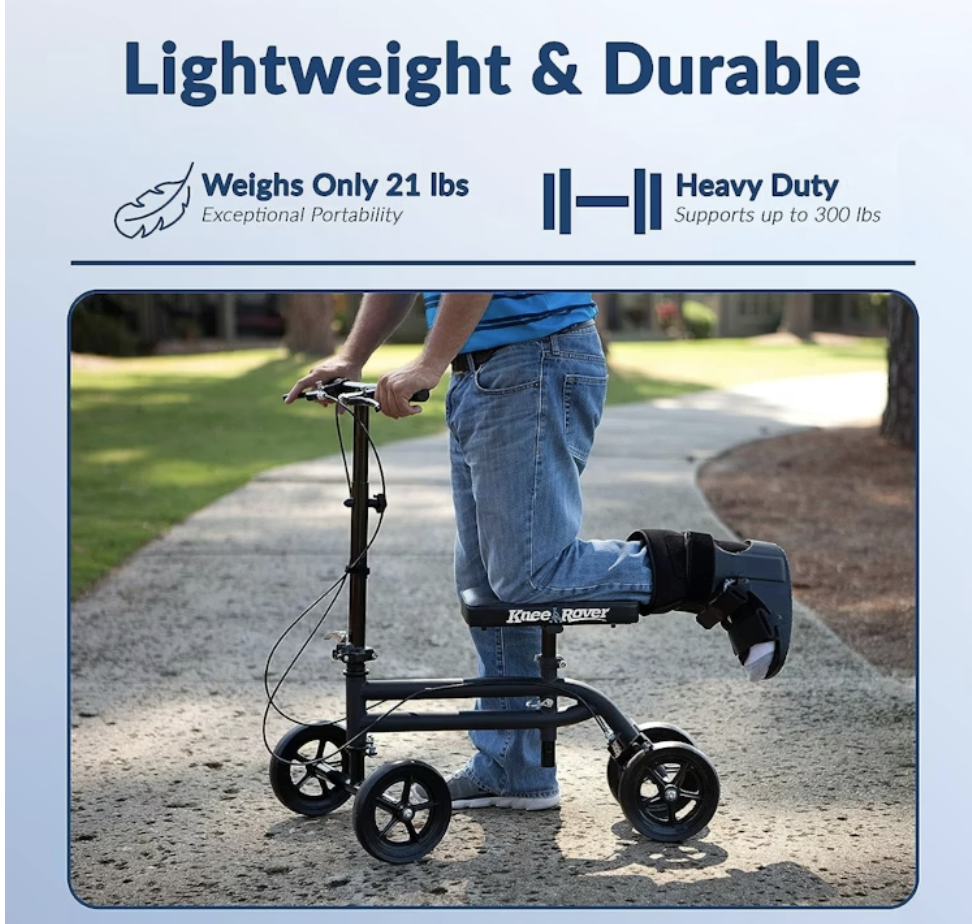
A knee scooter is a wheeled mobility device that lets you rest your injured leg on a padded platform while you push yourself forward with your good foot 26 Foot & Ankle — similar to riding a kick scooter, except your bent knee does the resting instead of your standing foot. Most models have three or four wheels, adjustable handlebars for steering, Grokipedia and bicycle-style hand brakes for speed control and parking.
You may hear this device called several different names. Knee walker, knee caddy, leg scooter, roll-about scooter, knee cruiser, and platform scooter all refer to the same piece of equipment. Rent A Knee Walker Don't let the terminology confuse you — they're interchangeable.
The modern knee scooter was invented in 1986 by Michael Reid, a British engineer who broke his foot and decided crutches weren't good enough. ekneewalker He developed the K9 Orthopaedic Scooter, which ekneewalker earned him Designer of the Year in 1993 and a place in the London Science Museum. ekneewalkerekneewalker By the early 2000s, knee scooters had gained widespread popularity across North America, Grokipedia and today they're recommended by the vast majority of orthopaedic foot and ankle surgeons for non-weight-bearing recovery.
Why most people choose a knee scooter over crutches
Crutches are the default option most people picture when they think about recovering from a foot injury. But anyone who has actually spent weeks on crutches knows the reality: sore armpits, aching wrists, exhausted shoulders, and the constant frustration of not being able to carry anything. Northsidemedicalsupply Even pouring a glass of water becomes a logistical challenge.
A knee scooter eliminates nearly all of these problems. Your hands are free when you're stationary, so you can carry a coffee, open a door, or work at a counter without awkward balancing acts. Bayshoremedicalsupply There's no armpit pain because your upper body isn't bearing your weight. MitchHoll-2022 A 1990 study published in The Journal of Bone and Joint Surgery confirmed that knee scooters use significantly less energy than crutches, ekneewalkerekneewalker and a more recent 2022 clinical study found that patients reported significantly higher satisfaction with knee scooters and overwhelmingly preferred them for any future surgeries. PubMed Central
Knee scooters are also more stable. MitchHoll-2022 With three or four wheels on the ground and a low centre of gravity, you're far less likely to slip HME180 — especially on wet Ottawa sidewalks in spring. Crutches require considerable upper-body strength and coordination, which can be a serious barrier for older adults or anyone with shoulder, wrist, or hand issues. Rent A Knee Walker A knee scooter requires almost none of that. Blue Cross Blue Shield of Michigan You simply kneel, grip the handlebars, and push.
The one area where crutches still win? Stairs. A knee scooter can't climb steps, Rent A Knee Walker so you'll still need crutches for stairways. Bayshoremedicalsupply But for everything else — getting around your home, your workplace, running errands — a knee scooter is the clear favourite.
How a knee scooter beats a wheelchair for most recoveries
A wheelchair might seem like an obvious alternative, but for a below-the-knee injury, it's often overkill. Sitting in a wheelchair puts you at counter height — which means you can't comfortably cook, wash dishes, reach shelves, or work at a standing desk. You also need wider doorways and clear pathways, Mxp4u which many Ottawa homes and older buildings simply don't offer.
A knee scooter keeps you upright and at your normal height. You can navigate tight hallways, squeeze through narrow shop aisles, and manoeuvre around furniture far more easily than in a wheelchair. Mxp4u It's also lighter — most models weigh between 20 and 27 pounds — and folds down to fit in a car trunk without any hassle.
There's a psychological benefit too. Many people recovering from temporary injuries find that using a wheelchair feels disproportionate to their situation, and they feel more independent and more like themselves when they're standing and moving on their own power. A knee scooter preserves your mobility and your sense of normalcy during a temporary setback.
Knee scooter versus a traditional walker
Standard walkers are designed for people who can bear at least partial weight on both legs. If your injury requires complete non-weight-bearing recovery — which most foot and ankle injuries do — a walker simply doesn't work. You can't keep your injured foot off the ground while also gripping and advancing a walker frame.
Even compared to a rollator (a walker with wheels), a knee scooter offers faster movement, smoother travel, and far less effort. There's no "lift, place, step" cycle — just a continuous gliding motion that covers ground quickly and comfortably. For anyone who needs to stay completely off one foot, a knee scooter is the practical choice.
How long can you use a knee scooter each day?
There's no strict clinical limit on daily usage, but your body will tell you when it's time for a break. Most people find they can use a knee scooter comfortably throughout the day with regular rest periods every 30 to 60 minutes. Your good leg is doing all the pushing work, so it tires faster than you'd expect — especially in the first week. Scooters for Knee
Several factors affect how long you can comfortably scoot. Knee platform padding is the biggest one: thin, firm stock pads can cause knee soreness after just 10 to 20 minutes of continuous use, while a quality memory foam pad cover extends comfort dramatically. Best Knee Scooter Handlebar height matters too — if it's set too low, you'll hunch forward and develop back and hip pain quickly. Rent A Knee Walker Proper knee platform height keeps your hips level and your posture straight, KneeRover which makes a significant difference over a full day.
Start with shorter trips and gradually increase your distance as your body adapts. Listen to your pushing ankle, your kneeling knee, and your lower back. If anything aches, it's time to sit down, elevate your leg, and rest.
What you can actually do on a knee scooter
One of the best things about a knee scooter is how much of your normal life it lets you keep. Indoors, you can move freely around your kitchen, navigate your office, browse the aisles at your local grocery store, and manage most household tasks. Rent A Knee Walker Cooking, doing laundry, washing dishes, working at a desk — all entirely doable. Performance Health
Outdoors, a knee scooter handles smooth pavement, sidewalks, and paved paths with ease. You can run errands along Bank Street, attend events at Lansdowne, stroll through the ByWard Market, or visit friends across town. Many people return to work within days of their surgery using a knee scooter, especially if their workplace has smooth floors and accessible entrances.
For rougher terrain — gravel paths along the Rideau Canal, uneven parkland, or cracked sidewalks — an all-terrain model with larger pneumatic tyres makes a real difference. KneeRover These models absorb bumps and roll over obstacles that would stop a standard indoor scooter. Vive Health
A practical tip: attach a basket to your handlebars. Mend Mobility It's the easiest way to carry groceries, a water bottle, your phone, or anything else you need while keeping both hands on the grips.
Comfort and ergonomics that matter
Not all knee scooters are created equal, and the details matter more than you might think. Here's what to look for:
The padded knee platform is where your shin rests for hours each day. It should be wide enough to support your leg comfortably (typically 7 to 7.5 inches wide) and cushioned with at least 2 to 3 inches of quality foam. Amazon Aftermarket memory foam covers are a worthwhile upgrade if the stock pad feels firm.
Adjustable handlebars should be set at waist or belly-button height so you stand upright with relaxed shoulders. Rent A Knee WalkerFoot and Ankle Associates of North Texas Hunching forward is the number-one cause of back pain during knee scooter use, and it's almost always a handlebar height problem.
Weight capacity on standard models is typically 300 pounds, BayshoremedicalsupplyRent A Knee Walker with heavy-duty models supporting up to 400 pounds. Amazon Keep in mind that your full weight is distributed between the platform and your standing leg, so the scooter never bears your entire body weight. Rent A Knee Walker
Turning radius varies between models. Three-wheel designs offer tighter turns for indoor use, while four-wheel designs provide greater stability. BayshoremedicalsupplyGrokipedia Most models steer 40 to 45 degrees, Rent A Knee Walker which handles hallways and rooms well but may require a three-point turn in very cramped spaces.
The brake system is critical for safety. Look for a bicycle-style hand brake for speed control plus a locking parking brake that prevents the scooter from rolling when you're stationary. Always engage the parking brake before mounting, dismounting, or reaching for anything. KneeRover
Injuries and conditions where a knee scooter helps most
Knee scooters are designed specifically for below-the-knee injuries that require non-weight-bearing recovery. Rent A Knee Walker If your injury is above the knee — a knee ligament tear, for example — a knee scooter won't work, because you need to bend your knee to use one. Wikipedia
The conditions that benefit most include ankle fractures, which are among the most common reasons people rent a knee scooter, with non-weight-bearing periods typically lasting 6 to 12 weeks. Foot surgery of nearly any kind — reconstructive procedures, fusions, hardware removal — usually requires complete rest from weight-bearing.
Achilles tendon ruptures and repairs are another leading use case, KneeRover with 76% of surveyed orthopaedic foot and ankle surgeons recommending knee scooters for this recovery. PubMed Central Bunionectomy patients benefit greatly, as do those recovering from metatarsal fractures and toe injuries that demand total offloading.
For chronic conditions, knee scooters can help people managing severe plantar fasciitis when non-weight-bearing therapy is prescribed, Foot & Ankle and they're valuable for patients with diabetic foot wounds that need protection from pressure while healing. Sky Medical SuppliesKneeRover In all cases, the key requirement is the same: the injury or condition must be below the knee, and your doctor has told you to keep weight off that foot.
Tips for getting started safely
Proper fit is everything. Before your first ride, adjust the knee platform so that when you kneel on it with your injured leg bent at 90 degrees, your hips are perfectly level. MyHealth Alberta Set the handlebars to waist height. Mend Mobility Stand tall, relax your shoulders, and confirm you can reach the brakes comfortably.
For safety, always engage the parking brake before getting on or off the scooter. Keep both hands on the handlebars while moving. MyHealth AlbertaKneeRover Wear a supportive, grippy shoe on your pushing foot — not a sandal or slipper. Rent A Knee Walker Clear your home of loose rugs, cords, and clutter that could catch the wheels. Americanmedicalssc
Navigating curbs takes practice. To go up, bring the front wheels to the curb edge, lean forward, lift the front wheels onto the curb, step up with your good foot, and roll the rear wheels up. To go down, approach the edge slowly, squeeze the brakes, and lower the front wheels gently before stepping down. MyHealth AlbertaMend Mobility Take it slow the first few times.
On inclines, use your brakes generously going downhill and maintain a steady, controlled pace going uphill. Rent A Knee Walker Avoid steep slopes entirely if possible — they're the one terrain where a knee scooter can feel unstable.
Why renting makes more sense than buying
Most below-the-knee recoveries last four to eight weeks. Buying a knee scooter outright — which can cost anywhere from $150 to over $400 for a quality model — means you're stuck with a bulky piece of equipment you'll likely never use again. Knee Scooter Rental You'll need to store it, try to resell it, or donate it.
Renting eliminates all of that. You get a professionally maintained, sanitised scooter for just the weeks you need it, at a fraction of the purchase price. There's no storage headache, no resale hassle, and no risk of buying the wrong model. Renting also gives you access to premium or all-terrain models you might not want to pay full price for but that make a genuine difference during your recovery. Rent A Knee Walker
Most insurance plans don't cover knee scooters, Foot & Ankle so whether you're buying or renting, it's likely an out-of-pocket expense. Renting keeps that expense as low as possible while ensuring you get proper equipment that's been inspected and fitted by someone who knows what they're doing.
About The Author
