
Renting vs. Buying Medical Equipment: Everything You Need to Know
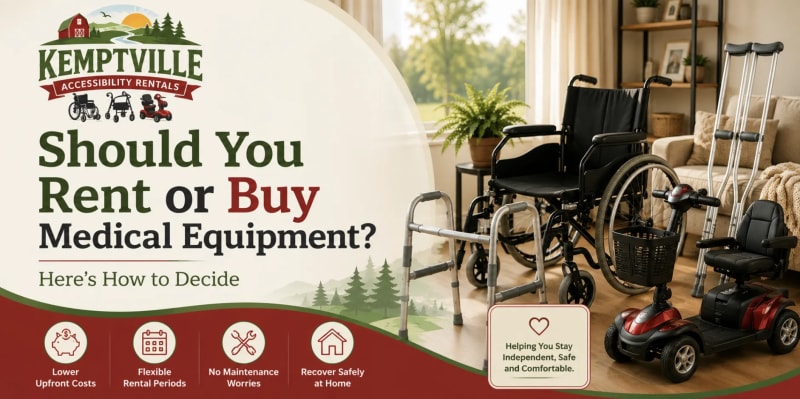
Whether you're recovering from surgery, managing an injury, or caring for a loved one, having the right medical equipment can make recovery safer, more comfortable, and more manageable. One of the first decisions many people face is whether to rent or buy the equipment they need. For many short-term situations, renting offers the flexibility to access quality equipment without the commitment and expense of purchasing it outright. However, there are circumstances where buying may be the better long-term investment. This guide explains when renting makes the most sense, when buying may be worth considering, and the key factors to help you make an informed decision.
When Renting Medical Equipment Makes the Most Sense
For many people, medical equipment is only needed temporarily. Whether you're recovering from surgery, rehabilitating after an injury, helping a family member remain safe at home, or accommodating a loved one during a visit, renting provides the support you need without the long-term commitment of ownership. It's also a practical option if you're unsure how long you'll need the equipment or want to try different mobility solutions before deciding whether purchasing is the right long-term choice. As your recovery progresses, renting gives you the flexibility to adapt your equipment to your changing needs.
When Buying May Be Worth Considering
Although renting is the right choice for many situations, purchasing may make more sense if you'll need the equipment every day for several years or have a permanent mobility condition. Long-term ownership can also be worthwhile if you require customized equipment, your healthcare provider recommends ongoing use, or insurance or another funding program helps cover the purchase. In these cases, the overall cost of ownership may become more economical than paying rental fees over an extended period.
Renting vs. Buying at a Glance
Renting is generally the better choice for temporary recovery because it requires a lower upfront investment, offers flexible rental periods, and eliminates the need to store equipment once it's no longer needed. Rental equipment is also professionally cleaned and maintained, and it's often easier to exchange if your mobility needs change during recovery. Buying, on the other hand, is typically better suited for permanent or long-term needs. While it involves a larger upfront investment and ongoing maintenance responsibilities, ownership can provide better long-term value for equipment that will be used daily for many years.
Questions to Ask Before You Decide
Every recovery is different, and there isn't a one-size-fits-all answer when deciding whether to rent or buy medical equipment. Before making your decision, think about how long you'll realistically need the equipment and whether your recovery timeline is likely to change. Consider whether your mobility needs are expected to improve over time, whether you have adequate space to store the equipment once it's no longer required, and whether renting would provide greater flexibility throughout your recovery. It's also worth checking whether your insurance covers rentals, purchases, or both, as this may influence the most cost-effective option. Taking the time to consider these factors can help you choose the solution that best fits your recovery, lifestyle, and budget.
Common Medical Equipment Available to Rent
Many people are surprised by the wide range of medical equipment available for short-term rental. Depending on your recovery or mobility needs, rental providers commonly offer wheelchairs, transport chairs, walkers, rollators, knee scooters, hospital beds, shower chairs, raised toilet seats, commodes, portable ramps, patient lifts, mobility scooters, and overbed tables. Having access to this variety of equipment makes it easier to find the right solution for each stage of recovery without purchasing items that may only be needed temporarily. While the exact inventory varies by provider, most rental companies offer equipment designed to improve safety, comfort, and independence at home.
There's no single answer when deciding whether to rent or buy medical equipment, but for many people recovering from surgery, an injury, or a temporary illness, renting offers the flexibility to get the support they need without making a significant financial commitment. Once your recovery is complete, you simply return the equipment rather than worrying about storage, maintenance, or reselling items you no longer use.
Kemptville Accessibility Rentals offers a wide selection of medical and mobility equipment for short- and long-term rentals, helping individuals and caregivers access the equipment they need to recover safely and comfortably at home. Whether you're looking for a wheelchair, walker, hospital bed, knee scooter, bathroom safety equipment, or another mobility aid, you'll find flexible rental options designed to support your recovery.
About The Author
